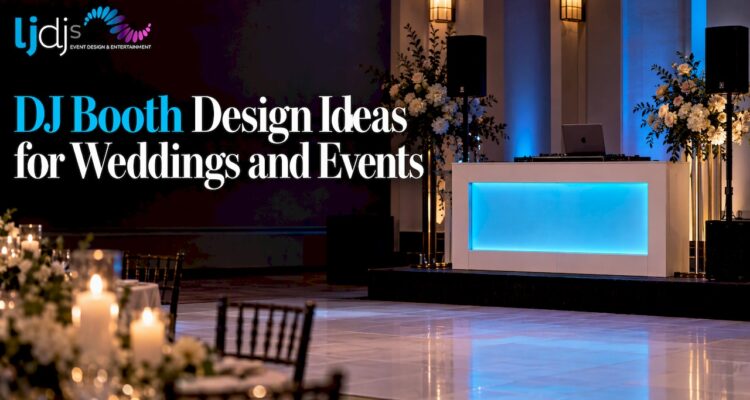
The best DJ booth designs do three things at once: they look like part of the room, they give the DJ room to work, and they put your story on display, whether that is a couple’s monogram, a company’s colors or a family’s culture. A folding table with a skirt does none of that. A booth designed around the event does all three, and the choices that get you there are mostly about style, materials, light, screens and layout.
This guide walks through those choices in the order you would make them. We run events across New Jersey, New York and abroad, and the booth is where we start when a client asks how to make a dance floor feel designed rather than assembled.
TL;DR
- Treat the booth as a design element, not equipment storage: it is the focal point guests face for hours.
- Pick the style from the event’s theme and venue first, then choose materials and finishes to match.
- Personalize with light, screens and monograms, and build them around the event’s flow rather than adding as many as possible.
- Plan the footprint, power and sightlines early: a standard single-DJ setup needs roughly 8×6 ft, close to power.
- A custom booth works best when the DJ, the lighting and the screens are designed together.
Table of Contents
- Why the booth is a design decision
- Booth styles that fit different events
- Materials and finishes
- Personalizing the booth
- Fitting the booth into the room
- Making the booth work with the rest of the event design
- Booth ideas by event type
- Perspective
- Bring the booth into your event
- FAQ
- Sources
Why the booth is a design decision
Event trade media have described the DJ booth as a blank canvas to amplify event design. One example in that gallery is a three-story scaffolding tower that housed five DJs in genre-labeled booths, with shifting lights and four LED squares projecting social feeds, DJ information and live performance shots. You do not need a tower to take the point: the booth can carry branding, content and mood, not just music.
For most weddings, milestone parties and corporate evenings, that translates into a simple question. When guests look toward the dance floor, what do you want them to see? The answer drives every choice below.
Booth styles that fit different events
Start with the room and the occasion, not with a photo you liked.
Statement booths for ballrooms and formal weddings
A piano-style or chandelier-style booth turns the DJ position into a piece of decor. Our Piano DJ Booth and Chandelier DJ Booth are designed for exactly this: elegant rooms where a plain table would break the look. Guests photograph them, and they sit comfortably beside florals and draping.
Mirrored and reflective booths for modern receptions
Mirrored finishes and glossy panels bounce light from the dance floor back into the room. They suit contemporary venues, lofts and hotel ballrooms with clean lines, and they pair well with moving lights.
Warm wood and industrial looks for barns, lofts and breweries
Reclaimed wood, black metal and exposed hardware echo the architecture of rustic and industrial venues. Wood is also easy to dress with greenery, signage or string lighting for a softer feel.
Screen-forward booths for corporate and milestone events
For product launches, galas, Sweet 16s and quinceañeras, a booth framed by video panels lets you show logos, sponsor loops, photo slideshows or live visuals. Our LED video walls and LED TV screens are built for this kind of setup, and the LED video wall rental cost guide helps you budget for it.
Culturally tailored looks
A Bar or Bat Mitzvah, a quinceañera and a South Asian wedding each have their own palette, symbols and music traditions. A booth can carry those: colors, patterns, lettering in more than one language. Because our team includes bilingual and international DJs and MCs, the booth design and the person behind it can be planned together for your guests.
Materials and finishes
A booth has to look good in photos and survive loading in and out of venues. Material choice matters more than most people expect.
A builder interviewed in Pioneer DJ’s guide says that MDF chips, scratches and does not last well, while pine is an economical, sturdy choice and oak is strong with a pleasing finish. That guide is about home booths, but the principle carries over to events: surfaces that get moved, wiped and stacked need solid materials and clean edges.
A few practical finish decisions:
- Fronts and facades: fabric, mirrored panels, wood slats, LED panels or custom graphics. Interchangeable fronts let one booth serve a cocktail hour in one look and the reception in another.
- Tops: matte surfaces cut glare from stage lighting and keep gear from sliding.
- Edges and trim: the same trim color as the room’s decor ties the booth in without matching it exactly.
- Cable management: the same builder notes that neat cable housing is the most common design standard across booths. At an event, that means no loose wire visible to guests.
Personalizing the booth
Once the shape and material are set, the booth becomes a canvas. These are the upgrades that people notice.
Light
Light does more for a booth than any finish. Uplighting washes the booth in your color, and moving lights above and around it create the sense of a club or concert. Layering matters: wash, accent and effect lights each do a different job, which we explain in our guide to dance floor lighting layers, placement and planning. We offer wireless uplighting and intelligent lighting for this.
Monograms and gobos
A projected monogram on the dance floor or the wall behind the booth is a quiet way to put names, initials or a company mark in the room. Placement matters, because a projection hitting a bright wall or a moving crowd loses clarity. Our wedding gobo lighting guide covers where to aim it.
Screens
A screen on or behind the booth can show a logo, a couple’s photos or music-reactive visuals. Design the content around the event’s sequence, from entrance to ceremony to reception to first dance to the DJ set, rather than filling the space with as many screens as possible. A simple, well-timed visual beats constant motion.
Effects and moments
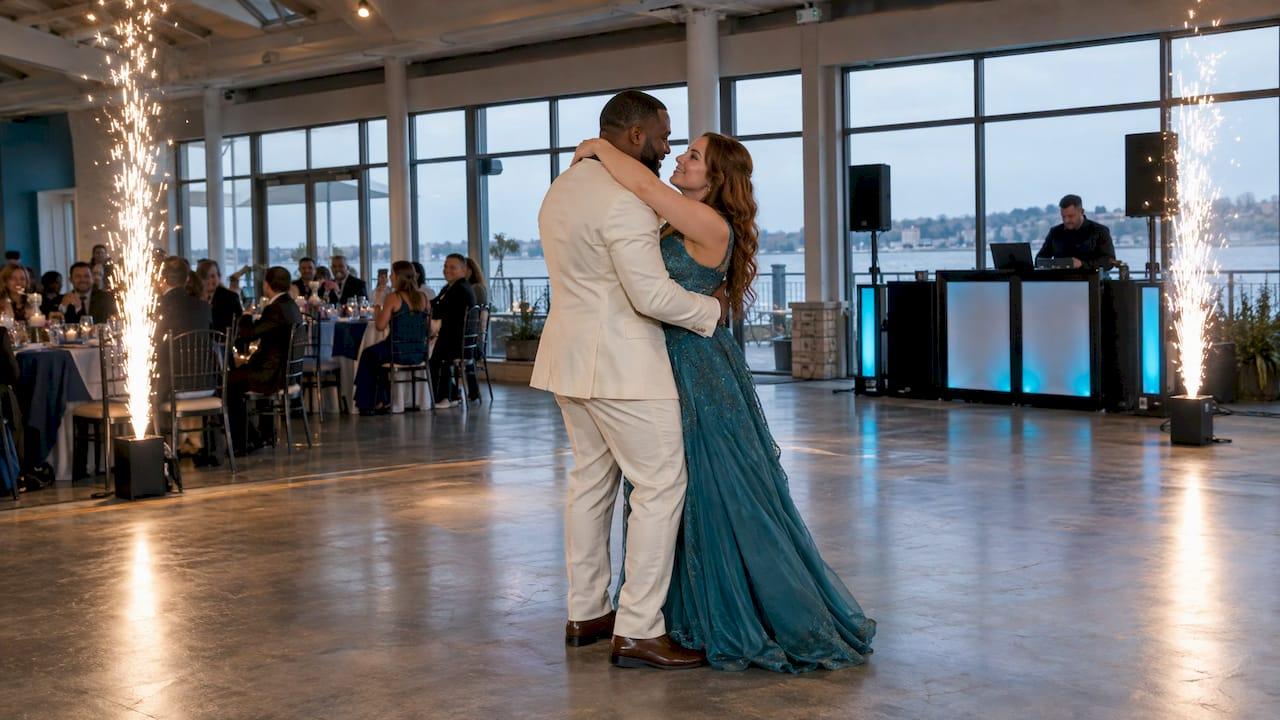
Indoor cold sparklers, an indoor snow effect and crowd motivators are all part of what we offer, and each pairs with the booth for peak moments such as the grand entrance, a first dance or a countdown. Keep these for two or three high points in the night so they land.
Capturing the room
A booth sits at the center of the room’s energy, so it is a natural neighbor for a video testimonial booth or a video photo booth, where guests leave messages and clips. Our in-house photography and videography teams can also capture the booth and dance floor at their best.
Fitting the booth into the room
A beautiful booth that does not fit, or that sits in the wrong spot, causes problems all night. Plan the practical side while you plan the look.
Footprint
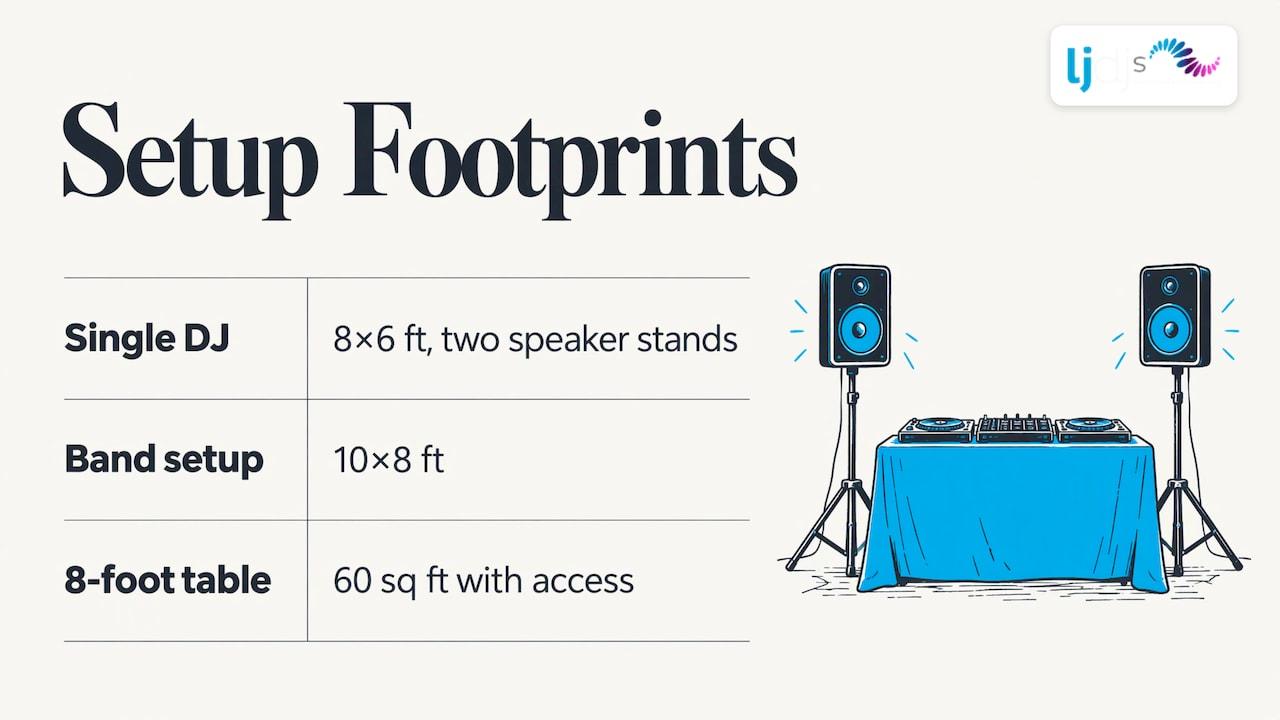
A venue-planning guide specifies an 8×6 ft standard footprint for a single DJ with two speaker stands, and 10×8 ft for a band setup. Another event planning guide says that an 8-foot table, including a DJ table, needs 60 square feet once you allow for access around it. A larger custom booth, a screen or a facade needs more, so ask for the dimensions early and check them against the floor plan.
Power
The same venue guide places the DJ on one long edge of the dance floor, within 10 ft of power, with a dedicated 20-amp circuit for a 1,500 to 2,000 watt rig. Lighting and screens add load, so give the venue contact the full equipment list rather than just the DJ’s.
Dance floor size
That guide’s formula for dance floor area is guest count × 0.33 × 4.5 sq ft per dancer. For 150 guests, that is about 223 square feet. The planning guide from Bright suggests adding 25% clearance to the floor’s square footage, so a 16×16 ft floor needs 320 square feet in total. The booth should sit at the edge of this area, not inside it.
Sightlines
The DJ should see the head table, the entrance and the floor, because cues for toasts, first dances and announcements depend on eye contact. Guests should see the booth without it blocking the photographer’s view of the dance floor. Keep seating for guests who prefer quiet, such as older relatives, farther from the speakers.
Paperwork
A written plan prevents day-of surprises. A stage plot and input list lays out where gear sits and what connects to what, and the same thinking applies to an event booth: a simple diagram showing the booth, speakers, cable routes and power source, shared with the venue and planner before load-in.
Making the booth work with the rest of the event design
The booth should echo the room, not compete with it. Four rules keep it that way:
- Use the event palette. Pick two or three colors from your florals, linens or brand and repeat them in booth lighting and screen content.
- Match the energy to the program. During dinner and toasts, dim screens and soft lighting keep attention on speakers. Open the visuals when the dance floor opens.
- Keep one focal point per sightline. If the head table has a floral installation and the booth has a bright video wall, guests’ eyes will bounce. Decide which one leads at each moment.
- Hide the practical parts. Cases, power strips and laptops belong behind a facade or under the table.
Because the DJ, the lighting, the screens and the booth design are all part of one plan, the changes from dinner to dancing can be cued together instead of coordinated across separate vendors. That is the reason for planning the booth as part of a full event design rather than as a rental by itself.
Booth ideas by event type
| Event | Booth idea | Pairs well with |
|---|---|---|
| Formal wedding | Piano or chandelier DJ booth | Uplighting, monogram projection |
| Modern wedding | Mirrored or LED-fronted booth | Intelligent lighting, video wall |
| Corporate event | Branded facade with logo screens | LED video wall, corporate event design |
| Sweet 16 or quinceañera | Screen-framed booth, bold color | Crowd motivators, specialty acts |
| Bar or Bat Mitzvah | Themed booth with custom graphics | Lighting, video wall, MC |
Perspective
After more than 25 years of designing celebrations, we think of the DJ booth as the part of the room that guests look at the longest. It deserves the same care as the florals or the linens.
What we have found matters most is that the booth, the lighting and the screens are planned as one system. A Piano DJ Booth under the right light, with a monogram on the floor and a video wall that carries your story, feels intentional. The same pieces bought separately rarely do.
It also has to reflect the people in the room. We have bilingual and international DJs and MCs on our team so the music, the announcements and the look of the booth all speak to your guests.
That is why we build booths around the client’s style and culture, and why we handle the design and the entertainment together.
LJDJS
Bring the booth into your event
If you want a booth that looks designed for your event, we can build it with you: a Piano DJ Booth or Chandelier DJ Booth, LED video walls, intelligent lighting, monograms and the DJ or MC to run it.
We plan weddings, corporate functions, Sweet 16s, quinceañeras and Bar and Bat Mitzvahs across New Jersey, New York and internationally. Tell us about your date and venue through our wedding entertainment page or the LJDJS home page and we will start from your style.
FAQ
How much space does a custom DJ booth need?
A standard single-DJ setup with two speaker stands is about 8×6 ft, and a band setup is about 10×8 ft, according to a venue-planning guide. Add room for screens, facades or lighting stands. Share your booth’s dimensions with the venue early.
Where should the DJ booth go at a wedding?
Place it on one long edge of the dance floor, close to power, with a clear view of the head table and the entrance. The same guide puts the DJ within 10 ft of power. Keep quiet seating away from the speakers.
What materials work best for a custom booth?
Solid woods such as pine and oak, and finishes that wipe clean and resist chipping, hold up best, as a builder in Pioneer DJ’s guide describes. For events, add a facade of fabric, mirrored panels or LED screens to suit the theme.
Can the booth show our monogram or logo?
Yes. A monogram can be projected on the floor or wall near the booth, and a screen can carry a logo or photos. Our gobo lighting guide explains placement for weddings.
How do we keep the booth from distracting from toasts and speeches?
Dim the screens and keep lighting soft during the program, then open the visuals when dancing starts. Plan these changes with your DJ in advance so cues happen together.
Sources
- Event Inspiration from DJ Booths, BizBash
- Your guide to building or buying a home DJ booth, Pioneer DJ
- Dance Floor & DJ Space in Your Wedding Tent, Forever Party Rentals
- Planning Guide, Bright Event Planning Guide
- Rap Show Stage Plot & Input List: A Practical Guide