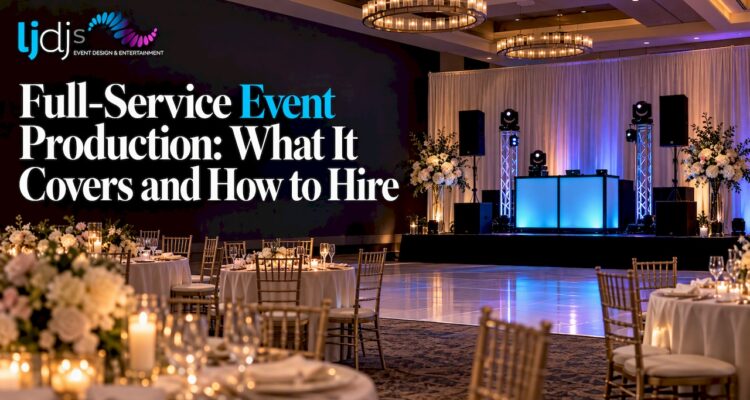
Full-service event production means one team designs, builds and runs the show side of your event: the entertainment, lighting, sound, video and the on-site coordination that holds them together. You hire one partner for the experience instead of booking a DJ, a lighting vendor, a video crew and a photographer separately and hoping they work as one. At LJDJS, we have spent more than 25 years producing weddings, corporate functions and milestone celebrations for clients in New Jersey, New York and beyond, with event design and entertainment under one roof.
TL;DR
- Full-service production covers the creative and technical side of an event: entertainment, event design, lighting, audio, video and the running of the room on the day.
- Planning is the vision and logistics before the event. Production brings that vision to life on event day.
- The biggest benefit of a single production partner is that sound, lighting, video and the DJ or MC are designed to work together and run to one timeline.
- Before you hire, settle the scope: what is included, who is on site, what the venue allows, and who answers when something changes mid-event.
- LJDJS offers DJs and MCs, Piano and Chandelier DJ Booths, LED video walls, lighting, photography and videography, and specialty acts as one production.
Table of Contents
- What full-service event production actually means
- Event planning vs. event production
- What a full-service production can include
- How the process works from first call to last song
- How production changes by event type
- Questions to settle before you book
- Why a single production team makes the day easier
- Bring your event to a team that produces it end to end
- FAQ
- Sources
What full-service event production actually means
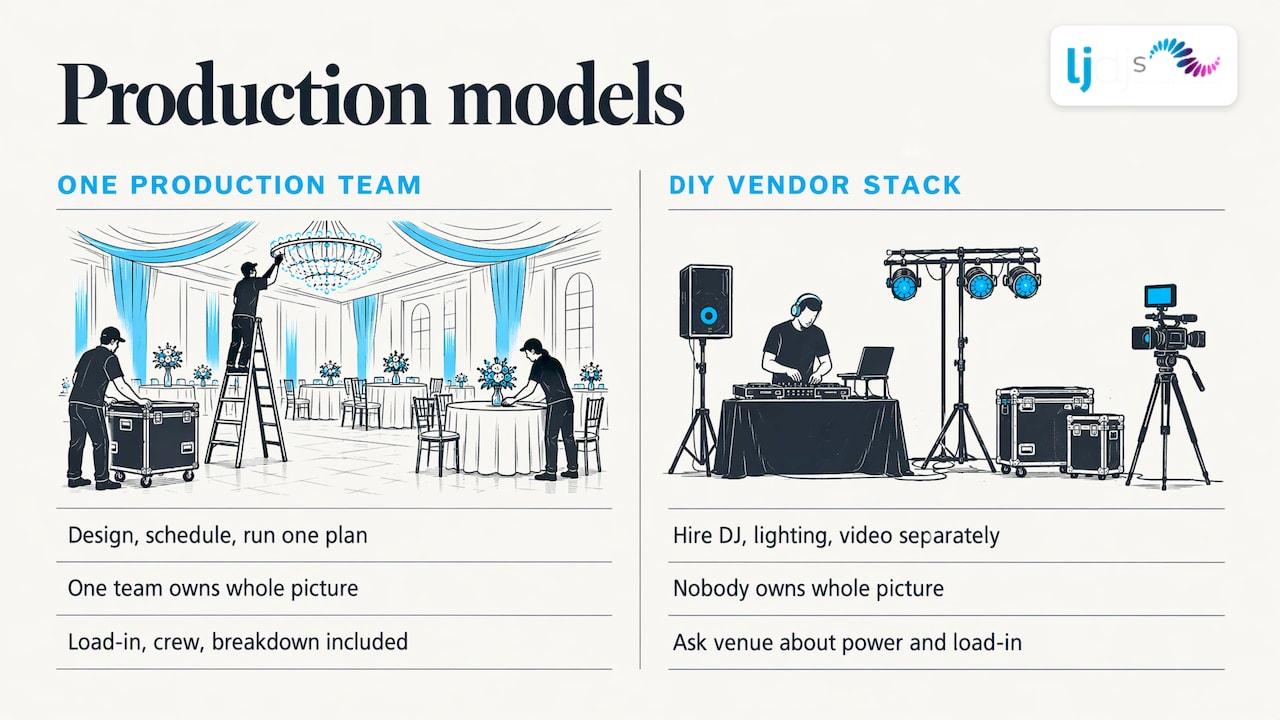
“Full service” is a loose phrase, so start with what it should mean to you. A full-service production company takes responsibility for the technical and creative elements that shape how your event looks, sounds and feels, and for delivering them on the day. Industry guides describe it as covering the load-in and build, the crew that operates the equipment, and the breakdown afterward. For a wedding or a milestone party that translates into something simpler: when the doors open, the room is ready, the music is right and nothing needs your attention.
The alternative is the do-it-yourself stack. You hire a DJ, rent uplighting from a second company, find a videographer, and ask your venue about power and load-in times. Each vendor does their job, but nobody owns the whole picture. Cues clash, a screen goes up where the lighting washes it out, and the person who ends up solving it is you, or the planner, or the best man.
One production team removes those hand-offs. Everything is designed together, scheduled together and run from one plan.
Event planning vs. event production
The two terms get mixed up constantly, and the difference decides who you need.
An event planner strategizes and manages the overall details. An event producer concentrates on delivering those details so guests have a memorable experience, a distinction Eventbrite draws in its guide to event production. Put simply, planning is the vision, the budget, the guest list and the logistics. Production is the execution: the sound check, the lighting cues, the video, the on-site coordination and the real-time problem solving.
You may need both, and they work well together:
| Event planning | Event production | |
|---|---|---|
| Main question | What are we doing and why? | How does it look, sound and run? |
| Typical work | Budget, venue, guest list, vendors, schedule | Entertainment, lighting, audio, video, staging, show flow |
| When it peaks | Months before the event | Final weeks and the event itself |
| Who hires | Hosts, couples, corporate teams | Hosts, planners, venues |
If you already have a planner, a production partner makes their job easier: the planner keeps the master schedule, and the producer owns everything that plugs in, lights up or plays. If you do not have a planner, a production team that also designs the event can carry much of the guest-experience side with you.
What a full-service production can include
Scopes differ by company, so read the list before you sign. Here is how the pieces usually divide, with what LJDJS offers in each area.
Entertainment
This is the heartbeat of the event. It means a DJ and MC who read the room, but it can also include live musicians and specialty acts. We provide bilingual and international DJs and MCs, celebrity DJ acts, live musicians and specialty acts, and crowd motivators who keep the dance floor moving. For couples who want a centerpiece, our Piano DJ Booth and Chandelier DJ Booth turn the DJ position into part of the design rather than a folding table in the corner.
Event design and lighting
Design is what makes the room look intentional. It covers the lighting scheme, the way the stage or dance floor is dressed, and the details that reflect your style and culture. Our menu includes wireless uplighting, intelligent lighting, monogram projection and pin spotting, plus effects such as indoor cold sparklers and an indoor snow effect. If you are weighing design on its own, our guide to event design services walks through what it includes, and for wedding monograms see gobo lighting and placement.
Audio and video
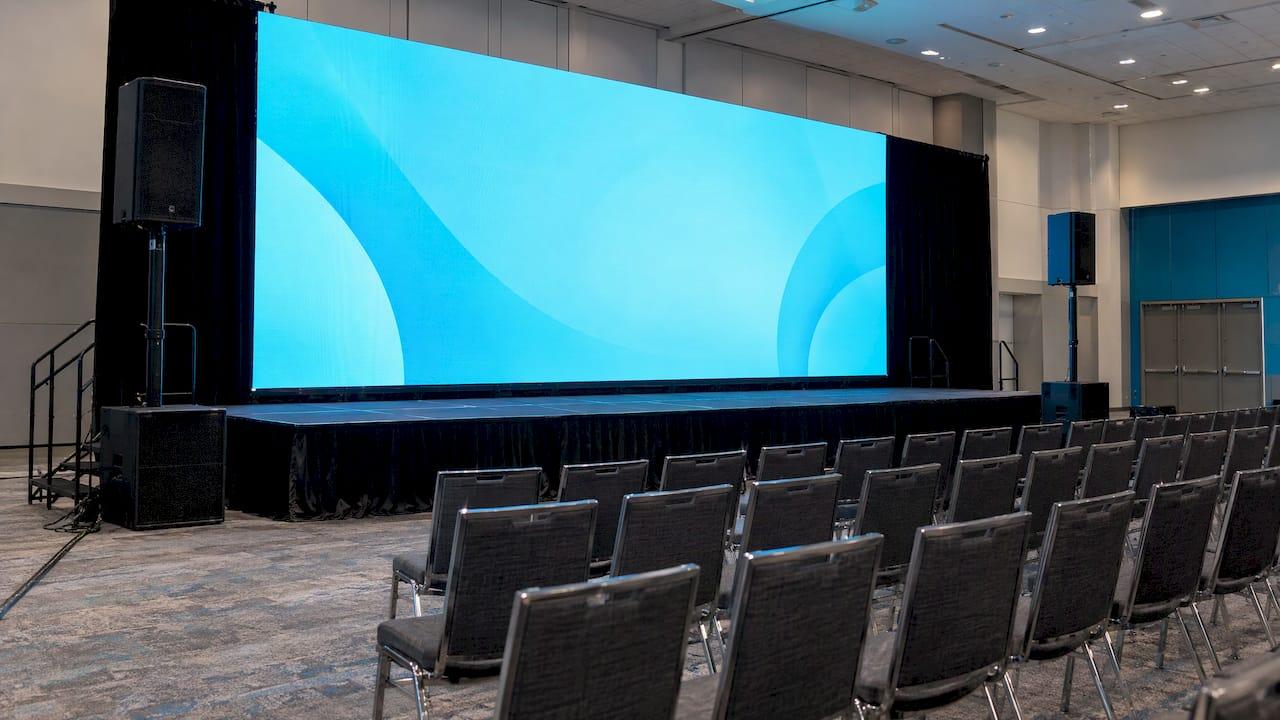
Sound has to carry to the back of the room without overwhelming the front tables. Video has to be visible without competing with the lighting. Our production offering includes LED TV screens and custom LED video walls for slideshows, live feeds, sponsor content and visuals. Read more about audio visual services and how to book them, or about LED video wall rental cost if you are budgeting for screens.
Photography, videography and guest experiences
Capturing the event is part of the show. We offer in-house photography and videography, classic and video testimonial photo booths, and RFID bands for interactive experiences. Corporate hosts often use the video testimonial booth to gather guest stories, and families like the video photo booth for guests of every age.
How the process works from first call to last song
The sequence below is how a well-run production unfolds. Use it as a yardstick for any company you talk to.
1. Discovery: define the experience
You describe the event: the guest count, the venue, the mood, the cultural traditions and the moments that matter, such as a first dance, a candle lighting, an awards presentation or a surprise performance. A good producer asks more questions than you expect. Where this goes wrong: a vague brief produces generic results, and you discover the mismatch on the night.
2. Design and scope
The producer proposes entertainment, lighting, video and design elements that match your brief and the room. This is where you decide what is in and out. Our approach is personalized: we design around the style and culture of each client rather than dropping in a template. Ask for the scope in writing, listing each element and its role in the event.
3. Venue coordination
Production depends on the room: ceiling height, power, load-in access, noise limits, curfew and where vendors may set up. Venues often publish rules and preferred-vendor information, and venue vendor lists are a good example of what to look for before you book anyone. Share those details with your production team early so the design fits the space, not the other way around.
4. Timeline and run of show
The run of show is the minute-by-minute plan: when the DJ announces the entrance, when the video plays, when the lights change for dinner, when the dance floor opens. It is shared with your planner, venue and any other vendors, so everyone works from one script. Where this goes wrong: separate vendors hold separate timelines, and nobody notices the conflict until a toast overlaps with a photo slideshow.
5. Load-in, setup and sound check
Equipment arrives, the build happens, and sound and lighting are tested before guests walk in. This is the stage that you should never see. If the host is still dealing with cables at the start of cocktail hour, the production is not doing its job.
6. Show day
The team runs the event. The DJ or MC leads the room, cues land on time, and changes, such as a late dinner service or an extended speech, get absorbed without the room noticing. Your role is to be a guest at your own party.
7. Breakdown
Equipment is packed and cleared on the venue’s schedule. You leave with the event you imagined and nothing to carry.
How production changes by event type
The building blocks stay similar, but the emphasis moves.
Weddings
Weddings run on emotion and flow: ceremony, cocktail hour, introductions, dances, dinner, party. Production here means music that follows each stage, lighting that moves the room from soft to energetic, and monograms or video moments that make the day yours. Our wedding entertainment page shows how it comes together, and ceremony music matters just as much as the party. If you are in the Garden State, see our guide to New Jersey wedding DJs.
Corporate events
Corporate production adds presentation needs: stage, screens, sound for speakers, branded visuals and a schedule that respects the agenda. Entertainment has to energize without disrupting the program. We cover this in depth in corporate event production, corporate event design and corporate entertainment in New York. If part of your audience attends remotely, our guide to virtual event production explains the format.
Milestone celebrations
Sweet 16s, Quinceañeras and Bar and Bat Mitzvahs combine family tradition with a room full of energetic guests of different ages. Production here often means choreographed entrances, interactive activities, bilingual MCs and dramatic lighting. See our pages on Sweet 16 and Quinceañera and Bar and Bat Mitzvah production, plus guides on Sweet 16 entertainment and choosing a Bar Mitzvah DJ.
Questions to settle before you book
Whatever company you consider, get clear answers to these. They separate a real production from a collection of rentals.
- What exactly is included? Ask for each element listed: entertainment, lighting, screens, sound, photography, setup and breakdown.
- Who is on site, and for how long? Know who arrives for setup, who runs the event and when the team leaves.
- Does the design suit the venue? Confirm the ceiling, power and access with the venue.
- How are language and culture handled? If your guests speak more than one language or your event has traditions, you need an MC who can lead them naturally. Our bilingual and international DJs and MCs are there for this.
- How are changes handled on the day? A producer should own the timeline and adjust without asking you.
- How do the elements work together? Ask how the lighting, video and music cues are coordinated.
For planners, the same list works as a vendor brief. A single production contact simplifies your own coordination: one conversation about sound, lighting, video and entertainment rather than four.
Why a single production team makes the day easier
The case rests on three practical points.
One plan. When entertainment, lighting and video are designed together, a cue means the same thing to everyone. The DJ’s announcement, the lights shifting for the entrance and the video wall cue land as one moment.
One point of accountability. When something shifts, one team adjusts. You are not mediating between vendors.
A cohesive look. Design choices, from a monogram on the floor to the DJ booth itself, are made as a set. Guests feel the difference even if they cannot name it.
What we have learned in more than 25 years
Hosts rarely remember the equipment list. They remember how the room felt when the first dance began, when the lights changed, when the whole family was on the floor. Production exists to make those moments happen reliably.
That is why we design around each client’s style and culture, and why we keep entertainment, design and enhancements within one team. A Piano DJ Booth, an LED video wall, a bilingual MC and a lighting plan are not separate products to us. They are parts of one experience, and we plan them that way from the first conversation.
If you are choosing between assembling vendors yourself and handing the production to one team, ask which option leaves you more present at your own event. For us, the answer is clear.
LJDJS
Bring your event to a team that produces it end to end
If you are planning a wedding, a corporate function or a family milestone in New Jersey, New York or farther afield, we can build the entertainment, design and production around your vision. Our production services bring together DJs and MCs, lighting, LED screens, photography and videography, and specialty acts, and we serve clients internationally as well as locally.
Tell us about your event through LJDJS and we will help shape the scope.
FAQ
Is full-service event production the same as event planning?
No. Planning covers the vision, budget, guest list and logistics before the event. Production covers the technical and creative execution, including sound, lighting, video and on-site coordination. Many events use both, and a production partner works alongside your planner.
What services can full-service event production include?
Typically entertainment, event design, lighting, audio, video and the crew to set up and run them. At LJDJS, that extends to DJs and MCs, Piano and Chandelier DJ Booths, LED video walls, intelligent and wireless lighting, monograms, photography and videography, photo booths, musicians and specialty acts.
When should I contact a production company?
As early as you have a date and venue. Early contact lets the design fit the room and gives you time to shape entertainment, lighting and video together. Availability for popular dates varies, so reach out once your date is set.
Can production be customized for my culture or traditions?
Yes. Our events are tailored to the style and culture of each client, and our bilingual and international DJs and MCs can lead moments such as cultural entrances, dances and traditions in the language your guests speak.
Do you work outside New Jersey and New York?
Yes. We serve clients in New Jersey and New York and offer our services globally.